

Table of Contents
- What You'll Need Before You Start
- Signs Your Walking Treadmill Belt Needs Attention
- How to Clean the Walking Treadmill Belt
- Choosing and Applying a Treadmill Belt Lubricant
- How to Tighten a Treadmill Belt Safely
- Environmental Factors That Affect Belt Life
- Your Treadmill Maintenance Schedule
- Common Mistakes to Avoid
Last Updated: August 11, 2026
What You'll Need Before You Start
Treadmill belt maintenance is the routine practice of cleaning, lubricating, tensioning, and aligning your belt to reduce deck friction, extend component life, and keep your walking surface safe. Skipping it is one of the fastest ways to wear out a motor prematurely.
Before you start, gather everything you need:
- Microfiber cloth (two, ideally, one damp, one dry)
- White vinegar solution or mild, non-abrasive cleaner diluted in water
- Silicone-based lubricant designed specifically for treadmill decks (not WD-40, not petroleum-based products)
- Allen wrench / hex key, check your manual for the correct size; most walking pads use 5mm or 6mm
- A vacuum with a narrow attachment for underside debris
- Safety key removed from the console before you start
Always unplug the power cord and remove the safety key before any maintenance. Static electricity can build up in the belt, and an accidental start while your hand is under the belt is a genuine hazard.
The Wild Bloom walking pad requires no assembly out of the box, which means the maintenance access points are straightforward, with no panels to remove.

Signs Your Walking Treadmill Belt Needs Attention
Most belt problems creep in gradually. Watch for these warning signs:
- Squeaking or grinding noise during use, often indicates insufficient lubrication or debris caught under the belt
- Belt slippage when you push off your stride, the belt hesitates or skips underfoot
- Belt tracking off-center, the belt drifts toward one side of the deck, creating uneven wear
- Burning or rubber smell, a sign of excessive deck friction from a dry, unlubricated surface
- Jerky or uneven motion, the belt doesn't move smoothly at consistent speed
- Visible fraying or cracking on the belt edges, a sign the belt has reached end-of-life
A common mistake is waiting for a squeaking noise before lubricating. By that point, the motor has already been working harder than it should. Preventative maintenance is always cheaper than reactive repair.
According to the Consumer Product Safety Commission's guidance on exercise equipment safety, regular inspection of moving parts on home exercise equipment is a key factor in preventing mechanical failures and user injuries.
How to Clean the Walking Treadmill Belt
Cleaning the walking surface is the most frequently neglected part of treadmill belt maintenance. Dust, skin cells, and small debris accumulate quickly on both the top and underside of the belt, increasing deck friction and accelerating belt wear.
Before any cleaning, confirm the unit is unplugged and the safety key is removed.
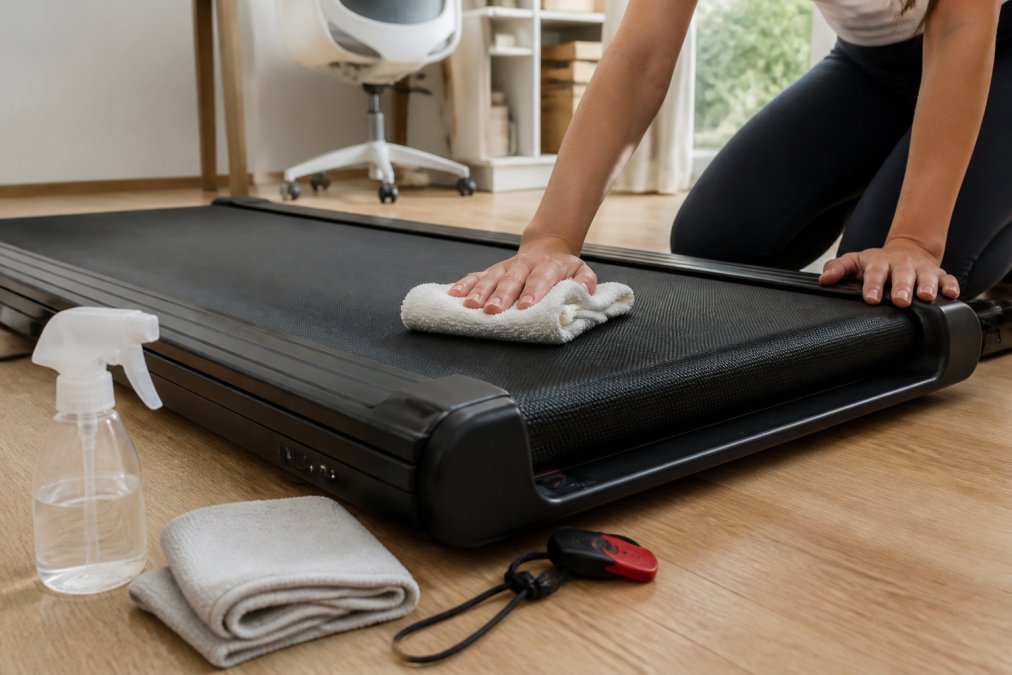
Cleaning the Top (Walking) Surface
- Dampen a microfiber cloth with a white vinegar solution (roughly equal parts white vinegar and water) or a very mild soap-and-water mix.
- Wipe the visible top surface of the belt in long, even strokes from side to side.
- Manually rotate the belt by hand in small increments so you can clean the full length of the belt.
- Follow immediately with a dry microfiber cloth to remove any moisture. Leaving the surface damp encourages belt delamination over time.
- Allow the belt to air-dry for five to ten minutes before use.
Avoid harsh chemical cleaners. They break down the anti-slip coating and can degrade the rubber compound in the belt itself.
Cleaning the Underside and Removing Debris
- Lift or tilt the unit to access the underside, depending on your model's design.
- Use a vacuum with a narrow nozzle attachment to remove dust and debris from the deck surface and the belt's inner face.
- Wipe the deck with a dry microfiber cloth to remove any remaining fine particles.
- Inspect the deck surface for scoring or grooves; if visibly worn, lubrication alone won't fix the problem.
For walking pads used in carpeted rooms, underside debris accumulates significantly faster. A quick vacuum pass every two weeks prevents buildup from becoming a friction problem.
Choosing and Applying a Treadmill Belt Lubricant
The right treadmill belt lubricant is a 100% silicone-based product, applied to the deck surface underneath the belt. This is the single most important maintenance task for belt longevity.
Here's what to avoid:
- WD-40, it's a solvent, not a lubricant, and it degrades rubber belts
- Petroleum-based lubricants, they attract dust and create a gummy residue
- Olive oil or vegetable oil, these go rancid and cause permanent deck damage
- Lubricant sprays not rated for treadmills, the viscosity is usually wrong
A 100% silicone lubricant in either liquid or spray form is the correct choice.
How to apply lubricant correctly:
- Loosen the belt slightly to create a small gap between the belt and the deck on each side.
- Apply the silicone-based lubricant along the centerline of the deck, working from the front roller to the rear roller. A thin, even line down each side is the target.
- Re-tension the belt to the correct tightness.
- Walk on the treadmill at a slow speed for two to three minutes to distribute the lubricant evenly across the deck surface.
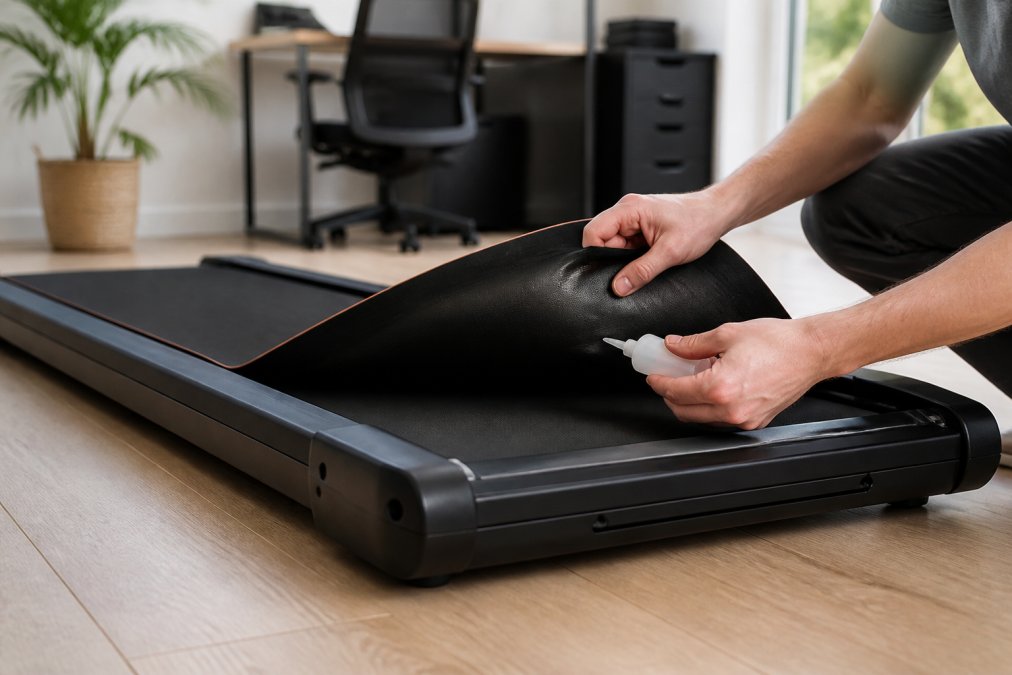
The American College of Sports Medicine's guidelines on home exercise equipment care consistently note that proper lubrication is the highest-impact single maintenance action for extending treadmill lifespan.
How to Tighten a Treadmill Belt Safely
Belt tension drifts gradually over weeks of regular use. A loose belt causes belt slippage, uneven wear, and increased motor strain.
How to check if your belt needs tightening:
Lift the center edge of the belt on one side. You should be able to lift it approximately 2-3 cm off the deck. More than that, and the belt is too loose. Less than 1 cm, and it's too tight.
To tighten the belt:
- Locate the adjustment bolts at the rear of the treadmill. There will be one on each side.
- Using your allen wrench, turn each alignment bolt clockwise by a quarter-turn (90 degrees) on both sides equally. Equal adjustment on both sides is critical.
- Walk on the belt for 30 seconds at a slow speed.
- Recheck the lift test. Repeat the quarter-turn adjustment if needed.
- Never exceed a half-turn total adjustment in a single session. Overtightening stresses the drive motor and rear roller bearings.
Centering a Misaligned Belt
A belt that consistently drifts to the left means the left side needs tightening; a belt drifting right means the right side needs tightening.
To center a misaligned belt:
- With the treadmill running at a very slow speed (1-2 km/h), observe which direction the belt drifts.
- If the belt drifts left, tighten the left alignment bolt by a quarter-turn clockwise.
- If the belt drifts right, tighten the right alignment bolt by a quarter-turn clockwise.
- Allow the belt to run for one minute, then reassess.
- Make incremental adjustments only. Overcorrecting creates the opposite tracking problem.
Belt centering is a two-minute task when done regularly. Left unaddressed, a misaligned belt wears through one edge significantly faster, shortening belt life considerably.
Environmental Factors That Affect Belt Life
The environment where you use your walking pad has a direct effect on how quickly the belt wears and how often you need to lubricate.
Temperature and humidity: Dry environments accelerate belt drying and increase deck friction. Central air conditioning systems cause belts to dry out faster and need more frequent lubrication. High humidity introduces moisture under the belt, promoting mold growth and deck delamination.
Flooring type: Hard floors generate less debris than carpet. Carpet fibers are pulled into the underside of the belt with every step, increasing friction. If your walking pad sits on carpet, clean the underside twice as often.
Dust levels: Home office environments with poor air circulation accumulate dust faster. Static electricity generated by the belt attracts fine particles, which then bond to the lubricant layer and reduce its effectiveness.
Footwear: Walking barefoot or in socks deposits more skin oils and debris onto the walking surface than wearing dedicated indoor walking shoes. Those oils break down the anti-slip coating faster.
Storage conditions: The Wild Bloom's foldable design makes it easy to store upright in a closet between sessions. Storing the unit folded and covered prevents dust accumulation on the belt surface during idle periods.
Your Treadmill Maintenance Schedule
A consistent maintenance schedule is what separates a belt that lasts two years from one that lasts six. The tasks themselves take less than 15 minutes combined.
| Maintenance Task | Frequency | Time Required |
|---|---|---|
| Wipe top walking surface | After every use | 2 minutes |
| Vacuum underside debris | Every 2 weeks | 5 minutes |
| Apply silicone lubricant | Every 3 months (light use) / Monthly (heavy use) | 10 minutes |
| Check belt tension | Monthly | 3 minutes |
| Check belt alignment/tracking | Monthly | 2 minutes |
| Full inspection (belt wear, deck condition) | Every 6 months | 15 minutes |
"Light use" means under 30 minutes per day. "Heavy use" means 30+ minutes daily. If that's your pattern, move lubrication to a monthly interval.
Walking Pad vs. Full-Sized Treadmill: Frequency Differences
Walking pads and full-sized treadmills have meaningfully different maintenance needs. Full-sized treadmills typically run at higher speeds and carry more user weight, generating more heat and friction per session. Walking pads operate at lower speeds and lower belt tension, reducing the rate of lubricant breakdown.
The practical difference:
- Lubrication interval: A walking pad used for desk walking at 2-4 km/h needs lubrication roughly every three months. A full-sized treadmill running at jogging speeds needs lubrication monthly.
- Belt tension checks: Walking pads drift less quickly because belt stress is lower. Monthly checks are sufficient.
- Underside cleaning: Walking pads sit closer to the floor and pick up more ground-level dust. Compensate with more frequent underside cleaning.
- Deck wear: Because walking pads operate at lower friction loads, the deck typically lasts longer before needing replacement.
According to the National Institutes of Health's research on sedentary behavior and light physical activity, regular low-intensity walking throughout the workday provides measurable cardiovascular benefits. Keeping your walking pad in good working order directly supports that consistency.
Common Mistakes to Avoid
Using the wrong lubricant. Petroleum-based products, cooking oils, and general-purpose sprays all damage the belt and deck. Use only a silicone-based lubricant rated for treadmill decks.
Overlubricating. More lubricant is not better. Excess silicone migrates to the walking surface, reduces traction, and creates a slip hazard.
Adjusting belt tension unevenly. Turning one side more than the other causes belt tracking problems. Always adjust both sides in equal increments.
Cleaning with harsh chemicals. Bleach, ammonia-based cleaners, and abrasive products strip the anti-slip coating. White vinegar solution or mild soap and water are the safe choices.
Ignoring the underside. Most people wipe the top surface and consider the job done. The underside is where friction damage actually occurs.
Not checking belt tension after lubrication. Applying lubricant can cause the belt to feel slightly looser. Always do a tension check after lubrication.
Running the treadmill immediately after cleaning. Give the belt five to ten minutes to dry before use. Moisture on the walking surface reduces grip and can seep into the deck.
The Wild Bloom walking pad's anti-slip, shock-absorbing belt is designed to hold up well with basic maintenance. The 15 minutes per month this takes is genuinely worth it.
For a deeper look at best practices for home exercise equipment care, the American Council on Exercise's equipment maintenance resources offers practical guidance applicable to walking pads and compact treadmills.
Keeping your walking pad in good working order comes down to three things: clean it regularly, lubricate it on schedule, and check tension before problems develop. The Wild Bloom portable under-desk treadmill is built with maintenance simplicity in mind. The foldable design gives easy access to the belt and deck, the quiet motor below 45 dB stays under less strain at walking speeds, and the anti-slip belt holds up well when properly cared for. Get started with the Wild Bloom portable under-desk treadmill and keep your daily step count consistent without disrupting your workday.
Frequently Asked Questions
What do you lubricate a treadmill belt with?
Always use a 100% silicone-based lubricant, either a liquid or spray formulation. Silicone lubricant reduces deck friction without damaging the belt material or the treadmill deck surface. Avoid petroleum-based products like WD-40, which can degrade the belt over time and attract more debris. Most walking pad manufacturers recommend a dedicated treadmill lubricant spray, which makes application under the belt straightforward without needing to fully disassemble the unit.
Can I use WD-40 to lubricate my treadmill belt?
No. WD-40 is petroleum-based and will break down the rubber and polymer compounds in your treadmill belt over time. It also attracts dust and debris, which increases deck friction rather than reducing it. Stick to a silicone-based lubricant specifically designed for treadmill belts. Using the wrong product can void your warranty and accelerate belt wear, meaning you'll need a replacement far sooner than expected.
How often should you lubricate a walking treadmill belt?
For a compact walking pad used at moderate intensity, typically 1 to 2 hours per day, lubricate every 3 months or roughly every 40 hours of use. If you walk more frequently, shorten that interval. A simple test: lift the edge of the belt and run your finger along the deck. If it feels dry or rough rather than slightly slick, it's time to lubricate. Consistent lubrication is one of the most effective forms of preventative maintenance for extending belt life.
How long do treadmill walking belts last?
A well-maintained walking treadmill belt typically lasts 3 to 5 years under regular home use. Neglecting cleaning and lubrication can cut that lifespan significantly by increasing motor strain and deck friction. Environmental factors like high humidity, dust, and static electricity also accelerate belt wear. Following a consistent treadmill maintenance schedule, cleaning monthly and lubricating every 3 months, gives you the best chance of reaching or exceeding that range without needing an early replacement.
This article was written using GrandRanker