

Table of Contents
- What Walking Treadmills Actually Do for Your Health
- How to Increase Daily Step Count With a Walking Treadmill
- Cardiovascular and Metabolic Benefits
- Treadmill Desk Calorie Burn and Weight Management
- How Long to Walk on a Treadmill for Weight Loss
- Musculoskeletal Health and Long-Term Impact
- Mental Health, Cognitive Function, and Workplace Productivity
- Conclusion: Making Walking Treadmills Work for You
Last Updated: August 18, 2026
What Walking Treadmills Actually Do for Your Health
Walking treadmills can meaningfully increase daily step counts, support cardiovascular function, and help manage weight, but only if you use them consistently. This guide from Wild Bloom breaks down what the evidence shows, what actually happens in real-world use, and how to make a walking treadmill work for your lifestyle rather than become another piece of equipment gathering dust.

The appeal is obvious: integrate movement into work without leaving your desk. But the gap between potential and practice matters most. A walking treadmill that sits unused delivers zero health benefits. A walking treadmill you actually use during work hours can shift your daily activity level significantly. The difference isn't the equipment; it's whether your setup, workspace, and expectations align with sustained use.
How to Increase Daily Step Count With a Walking Treadmill
The most direct health benefit of a walking treadmill is increasing your daily step count without restructuring your day. Most desk workers sit 7-9 hours daily. A walking treadmill lets you convert a portion of that seated time into low-impact movement.
Walking at 2 mph for one hour burns roughly 240 calories and logs about 2,000 steps. If you walk during two work hours daily, you've added 4,000 steps, enough to move many people from sedentary to moderately active categories. Consistency matters most.
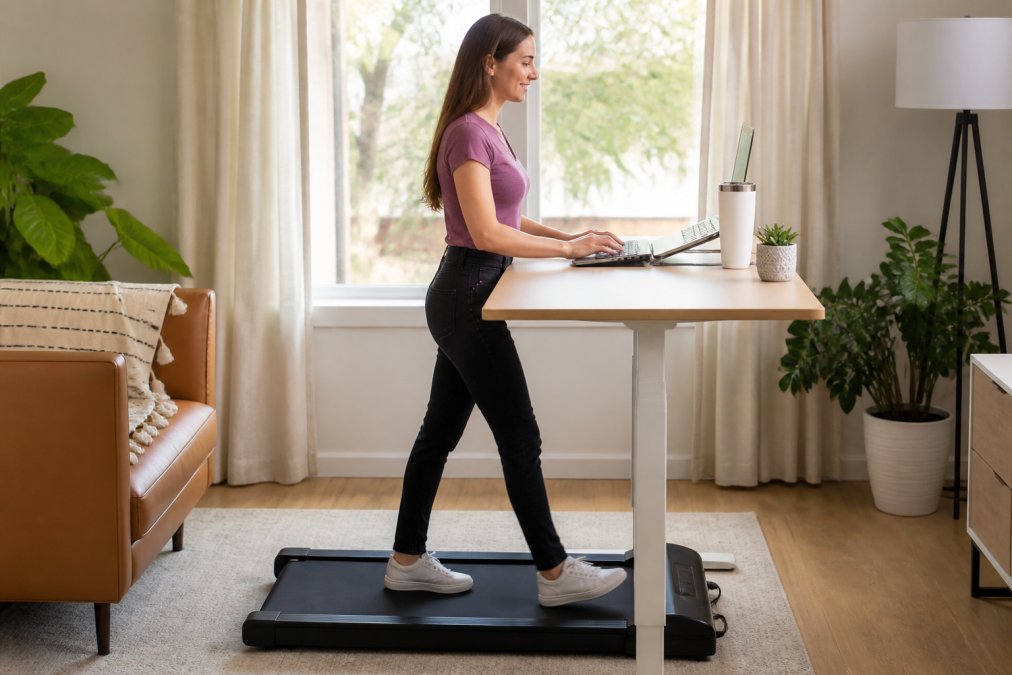
Most people find 1.5-2.5 mph is the sweet spot for typing, reading, or attending video calls. Slower speeds feel less intrusive, produce less noise, and let you maintain focus. The Wild Bloom portable under desk treadmill is designed specifically for this, with a quiet motor below 45 dB so you can walk during calls without clients hearing background noise.
Real increases in step count come from consistency, not speed. Walking 30 minutes daily at 2 mph adds 1,000 steps. Do that five days a week, and you've added 5,000 steps weekly, roughly 250,000 annually, equivalent to running a marathon in extra movement spread across your normal workday.
Cardiovascular and Metabolic Benefits
Walking treadmills support cardiovascular health primarily by reducing sedentary behavior. Prolonged sitting elevates cardiovascular disease risk independent of exercise; moving regularly throughout the day counteracts that effect.
Regular walking keeps your metabolic rate engaged and helps regulate insulin sensitivity. Research shows that breaking up sitting time with frequent movement improves glucose control more than a single exercise session later in the day. Walking at 2-3 mph doesn't elevate your heart rate to training zones, but the benefit comes from non-exercise activity thermogenesis (NEAT), the calories burned through everyday movement.
For cardiovascular health, consistency matters more than intensity. A person who walks two hours daily at 2 mph accumulates more aerobic benefit than someone who runs intensely three times a week but sits the rest of the time. The treadmill works because it's integrated into your normal routine.
The shock-absorbing belt on a quality walking treadmill reduces joint impact compared to outdoor walking on pavement, making sustained use more comfortable and supporting long-term adherence.
Treadmill Desk Calorie Burn and Weight Management
At 2 mph, most people burn 200-280 calories per hour depending on body weight. At 3 mph, that increases to 300-400 calories per hour. Walking two hours daily at 2 mph burns roughly 400-560 calories weekly, equivalent to 2,000-2,800 additional calories. Over a year, that's roughly 100,000-145,000 calories, equivalent to 30-40 pounds of fat if diet remains constant.
The key limitation: walking on a treadmill won't create the caloric deficit needed for significant weight loss alone. But it makes weight maintenance easier and supports modest weight loss when combined with reasonable nutrition.
Regular movement also improves insulin sensitivity, affecting how your body processes carbohydrates and stores fat. People who move consistently throughout the day tend to have better metabolic markers than those who exercise intensely but sit the rest of the time. Walking also influences food choices; many people report reduced snacking when moving regularly.
How Long to Walk on a Treadmill for Weight Loss
Consistency beats intensity for sustainable results. Walking 30 minutes daily produces more weight-management benefit than walking 90 minutes once a week. Research suggests 150 minutes of moderate-intensity activity weekly supports health maintenance. Walking at 2-3 mph is light to moderate intensity.
Start with what you can sustain. Many people begin with 30-60 minutes of walking daily while working, then adjust based on how it feels. Walking longer at slower speeds tends to be more sustainable than walking shorter at faster speeds.
For weight loss, combine treadmill walking with modest dietary awareness. A 300-500 calorie daily deficit from walking, combined with slight reduction in food intake, produces steady weight loss of 0.5-1 pound weekly.
Musculoskeletal Health and Long-Term Impact
Walking treadmills are low-impact, which is good for joints. But long-term musculoskeletal health depends on how you set up your workspace and whether you maintain posture during extended walking sessions.
The primary risk is repetitive strain from poor ergonomics. Walking while typing requires your shoulders, wrists, and neck to work in ways they don't during seated work. Proper setup matters: your elbows should be at 90 degrees when typing, your screen at eye level, and your keyboard close enough that you're not reaching.
The shock-absorbing belt reduces impact, but it's not a substitute for proper footwear and posture. Walking in unsupported shoes or with poor gait mechanics can stress your knees and hips over time.
Long-term benefit comes from viewing the walking treadmill as part of a broader movement practice. Combine treadmill walking with some basic strength work, bodyweight exercises, or light weights a few times weekly to support long-term joint and muscle health.
The foldable design of the Wild Bloom treadmill means you can store it when not in use, which supports the psychological consistency that determines whether you'll actually use it long-term.
Mental Health, Cognitive Function, and Workplace Productivity
Walking while working affects your mind. Regular movement reduces stress hormones, improves mood, and supports cognitive function. Sitting for hours creates mental fatigue; moving interrupts that fatigue and resets your focus.
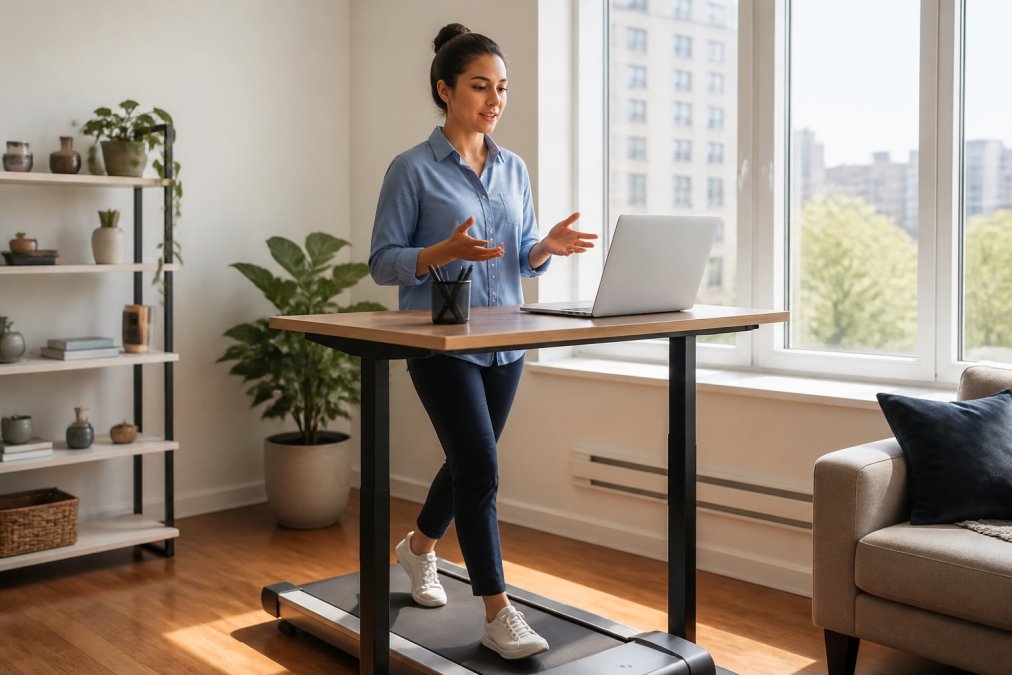
For remote workers, walking on a treadmill during work provides movement without leaving your workspace. You're not "taking time away" from work to exercise; you're integrating movement into work itself. That framing reduces the mental friction of adding activity to an already-full day.
Walking won't make you more productive at complex tasks, but it prevents the productivity decline that comes from prolonged sitting, the afternoon slump, mental fatigue, reduced focus. A walking treadmill maintains your baseline productivity.
Stress reduction is more concrete. Regular movement lowers cortisol levels and activates the parasympathetic nervous system. For people managing high-stress jobs, integrating movement throughout the day provides ongoing stress regulation that a single exercise session can't match. The quiet motor of a quality treadmill matters here; if your equipment makes noise, you're creating stress rather than reducing it.
Conclusion: Making Walking Treadmills Work for You
Walking treadmills improve health when they're actually used consistently. The realistic benefits include increased daily step count, reduced sedentary time, modest calorie burn, better blood glucose regulation, and improved stress management.
The real obstacles are setup and consistency. Equipment that's noisy, unstable, or takes up too much space won't get used. A compact, foldable, quiet treadmill removes the friction that stops people from using it.
Start small: add 30 minutes of walking daily at a pace that doesn't compromise your work. Track how you feel after two weeks. If it's sustainable and you notice reduced afternoon fatigue or better focus, extend it. If it feels forced, adjust the duration or speed.
For remote workers and desk-bound professionals, a walking treadmill addresses one of the biggest health challenges of modern work: prolonged sitting. The Wild Bloom portable under desk treadmill is built specifically for this, with no assembly, quiet operation, and easy storage so you can integrate it into your workspace without disruption.
Movement throughout the day improves health outcomes. A walking treadmill is one practical way to achieve that. Whether it works for you depends on whether it fits your actual life, not on the marketing claims.
Frequently Asked Questions
Is 20 minutes of treadmill walking a day enough to see results?
Yes, 20 minutes daily can produce measurable results. Research shows that consistent low-impact walking improves cardiovascular health, increases daily step count toward the 10,000-step guideline, and supports calorie burn for weight management. The key is consistency, daily walking, even at a moderate pace, raises your metabolic rate and reduces the health risks of prolonged sedentary behavior. Most people notice improved energy and better sleep within 2-3 weeks of regular use.
How many miles is 10,000 steps walking on a treadmill?
Approximately 5 miles, assuming an average stride length of 2.5 feet. On a treadmill, this typically takes 1.5 to 2 hours at a comfortable 2.5 to 3.5 mph walking pace. Many people break this into smaller sessions throughout the day, for example, three 20-minute walks at 3 mph covers about 1 mile per session. Using a walking treadmill at your desk allows you to accumulate steps passively while working, making the 10,000-step target more achievable without dedicated gym time.
Can walking treadmills cause back pain or posture problems?
Walking treadmills are low-impact and generally support good posture when used correctly. Unlike running, walking places minimal joint stress and allows you to maintain upright, neutral posture. The key is proper ergonomics: keep your desk at elbow height, position your screen at eye level, and walk at a natural pace (2.5-3.5 mph). Poor desk setup, reaching too far or hunching, can strain your back regardless of the treadmill. A shock-absorbing belt reduces impact on knees and ankles, protecting your musculoskeletal system during extended use.
Will a quiet walking treadmill still pick up on my microphone during video calls?
A high-quality, quiet walking treadmill with a motor below 45 dB produces sound similar to soft background noise, comparable to a refrigerator or gentle air conditioning. Most modern treadmills with sound-dampening technology and anti-slip belts won't transmit vibration to your desk or microphone. However, placement matters: position the treadmill away from your microphone, use a desk-mounted mic rather than a built-in laptop mic, and test during a practice call. Many remote workers successfully use quiet treadmills during meetings without client complaints.
Walking treadmills improve health most effectively when integrated into your daily work routine with realistic expectations and proper ergonomic setup. Wild Bloom's portable under desk treadmill supports this with a no-assembly design, quiet motor below 45 dB, and foldable construction, removing the friction that stops most people from maintaining consistent use. Get started with Wild Bloom and build sustainable movement into your workday without disruption.
This article was written using GrandRanker