

Table of Contents
- Understanding Decibels and Walking Treadmill Noise Levels
- Motor Hum vs. Footfall Impact: What Actually Creates the Noise
- Is a 35 dB Walking Pad Actually Quiet
- How to Reduce Treadmill Noise in Apartments
- Using a Treadmill Mat for Noise and Vibration Control
- Maintenance and Long-Term Noise Degradation
- Conclusion
Last Updated: August 27, 2026
Understanding Decibels and Walking Treadmill Noise Levels
Noise from a walking treadmill is measured in decibels (dB), a unit that quantifies sound pressure level on a logarithmic scale. A 10 dB increase represents a doubling of perceived loudness. Most walking treadmills operate between 50-70 dB, while quieter models like Wild Bloom's portable under desk treadmill run below 45 dB, comparable to normal conversation or a quiet office environment (the NIH).

A 45 dB treadmill in a silent apartment registers differently than one in a busy household. According to EPA guidelines on noise exposure, prolonged exposure to sounds above 70 dB can cause hearing damage, but most home treadmill users aren't approaching that threshold. For apartment dwellers, the key concern is whether noise remains low enough to avoid disturbing neighbors or interrupting video calls.
A device rated at 35 dB sounds whisper-quiet on a spec sheet but can feel louder when standing on it, hearing mechanical vibrations through your feet and the floor. This is why marketing claims about "quiet motors" don't always match real-world experience.
Motor Hum vs. Footfall Impact: What Actually Creates the Noise
Walking treadmill noise comes from two sources: the motor and your footsteps. Motor hum is the continuous sound from the electric motor driving the belt. Footfall impact is the noise from your feet striking the running deck repeatedly. Footfall noise often dominates, especially in apartments where vibration transmits through floors and walls.
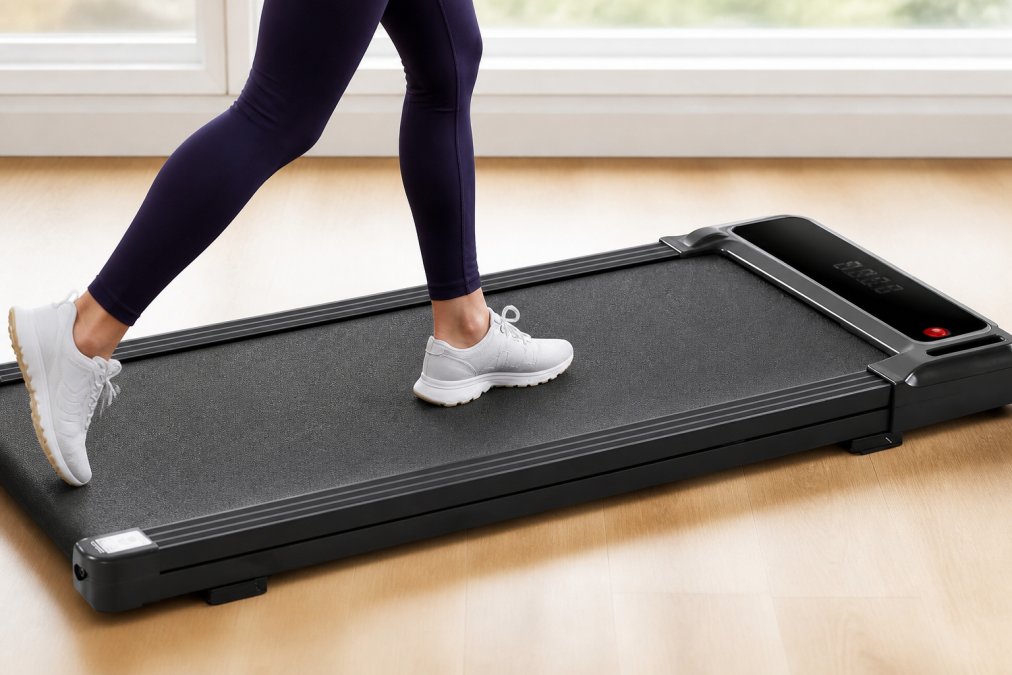
High-quality motors operate at a steady, predictable frequency. Quieter motors like those in Wild Bloom's design use brushless technology and sound dampening materials to minimize baseline noise. However, even a silent motor can't eliminate the physical impact of footsteps. Each foot landing creates vibration that travels through the running deck, frame, floor, and building structure. This structural noise transmission is what neighbors hear.
The belt contributes to noise through friction, generating a subtle whooshing sound. Worn belts create more friction and squeaking. The incline mechanism, if present, can introduce noise when adjusted, though most walking pads lack incline features.
Most guides focus entirely on motor decibels and ignore vibration dampening. A treadmill with a 35 dB motor can still transmit significant vibration to the floor if it lacks proper shock absorption. Belt quality, frame rigidity, and contact points between the treadmill and floor determine how much vibration reaches neighbors' ceilings.
Is a 35 dB Walking Pad Actually Quiet
A 35 dB walking pad is genuinely quiet, comparable to a whispered voice or library environment (the CDC). However, a 35 dB rating typically measures motor noise in isolation at the lowest speed with minimal load. As you add body weight and increase speed, actual noise increases.
Perception of "quiet" depends on your baseline. If accustomed to commercial gym treadmills at 65-70 dB, a 35 dB pad feels silent. In a soundproof home office, the same pad might register as noticeable background noise. Laptop and headset microphones are surprisingly sensitive to low-frequency motor hum and vibration transmitted through desks.
Many users report that a 35 dB walking pad is quiet for personal use but becomes problematic during video conferencing. Motor hum gets picked up by microphone input and sounds like persistent background buzz to call participants. This is one of the most common complaints from remote workers considering walking treadmills.
A 35 dB walking pad is quiet for casual use and won't disturb most household activities. For video calls, test it during a real meeting or position your microphone away from the treadmill. For downstairs neighbors, 35 dB is better than standard treadmills but not a guarantee of zero disturbance, vibration transmission through floors matters more than the absolute dB rating.
How to Reduce Treadmill Noise in Apartments
Reducing walking treadmill noise in apartments requires a multi-layered approach targeting both motor noise and vibration transmission.
Choose a treadmill designed for quiet operation. Look for models with brushless motors and sound-dampening materials inside the motor housing. Wild Bloom's portable under desk treadmill operates below 45 dB specifically because of these engineering choices, compared to standard treadmills running at 55-70 dB.
Isolate vibration at the source. Place your treadmill on a dedicated mat designed for vibration dampening. This is the second-most important step after equipment choice. A quality mat absorbs footfall impact and prevents vibration from traveling through your floor to neighboring units. Standard yoga mats provide minimal benefit; you need a mat specifically engineered for shock absorption.
Position strategically. Place your treadmill away from shared walls and as far as possible from neighbors' bedrooms. If your apartment layout allows, position it in an interior room rather than near exterior walls.
Add mass and absorption. Heavier objects dampen vibration better than lighter ones. Place your treadmill in a corner or against an interior wall and add acoustic panels or heavy curtains nearby to absorb sound.
Maintain your equipment. A well-maintained treadmill runs quieter than a neglected one. Regular lubrication of the belt, proper belt tension, and checking for loose components prevent squeaking and rattling.
Using a Treadmill Mat for Noise and Vibration Control
A treadmill mat for noise and vibration control serves as the primary barrier between your equipment and your floor. Purpose-built acoustic mats with multiple layers of shock-absorbing material perform significantly better than standard rubber mats.
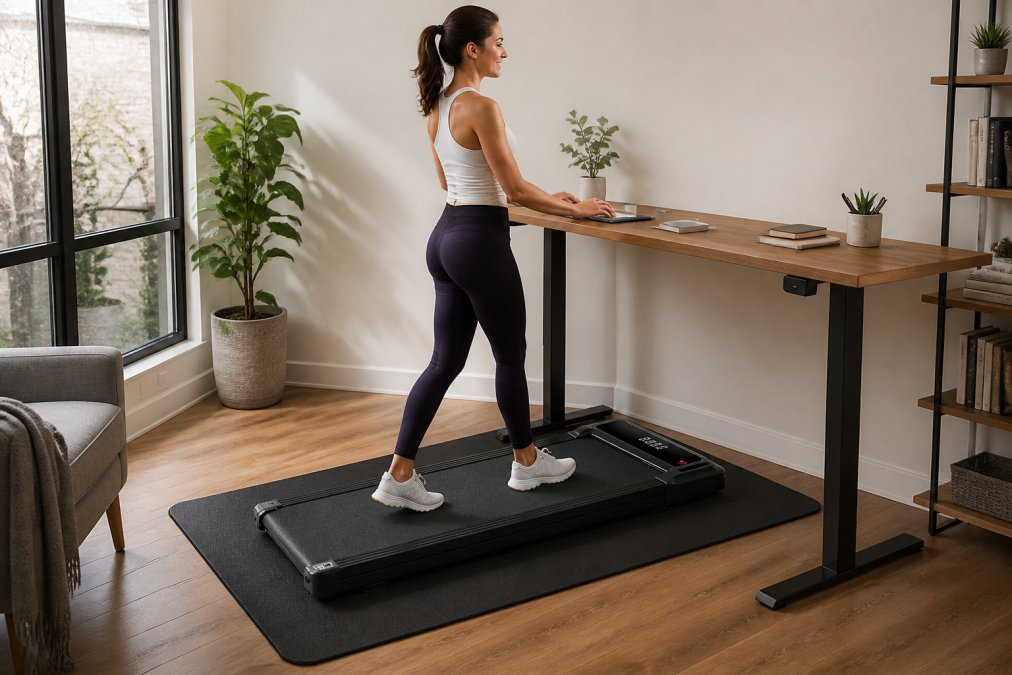
The mat absorbs impact energy from footsteps before it transmits through the floor structure. Each foot landing compresses the mat slightly, dissipating energy as heat rather than allowing it to travel through concrete, wood, or subfloors to neighboring units. Mat thickness and material composition matter, a 1/4-inch mat provides minimal benefit, while a 1/2-inch to 3/4-inch mat with closed-cell foam or rubber composition offers meaningful vibration reduction.
The mat should extend at least 6 inches beyond the treadmill footprint on all sides. For apartments with wooden floors over crawlspaces or basements, vibration travels more readily, making a thicker mat more important. For concrete subfloors, vibration transmission is less direct but still occurs, especially to downstairs units.
Some users combine a treadmill mat with isolation pads under the treadmill's feet, creating a double-isolation system. For most apartment dwellers, a quality treadmill mat rated for vibration dampening provides sufficient noise reduction when paired with a quiet treadmill like Wild Bloom's.
The mat also protects your floor from damage, preventing marks or dents on hardwood or laminate.
Maintenance and Long-Term Noise Degradation
Walking treadmill noise levels increase over time if maintenance is neglected. The running belt experiences wear with every step. As the belt ages, its surface becomes less uniform, increasing friction and creating squeaking or grinding sounds. Regular lubrication of the belt reduces friction and maintains smooth operation. Most manufacturers recommend lubricating the belt every 3-6 months.
Motor bearings degrade over time as well. A well-maintained motor runs smoothly and quietly; a neglected motor develops grinding or squealing as bearings wear. Keeping your treadmill in a dry environment and avoiding exposure to dust or moisture slows bearing degradation.
Belt tension affects noise significantly. A loose belt slaps against the deck, creating audible noise. A belt tensioned too tightly strains the motor and creates grinding sounds. Checking belt tension monthly and adjusting according to manufacturer specifications prevents both problems.
Loose components develop over time as vibration works fasteners free. A quarterly inspection where you tighten all visible bolts and check for loose components prevents rattling.
Long-term noise degradation is largely preventable through consistent maintenance. A well-engineered treadmill like Wild Bloom's with quality components will remain quiet longer than a budget model.
Frequently Asked Questions
What decibel level is considered quiet for a walking treadmill?
Quiet walking treadmills typically operate between 35-50 decibels. For context, normal conversation is around 60 dB. Anything under 45 dB is generally imperceptible during video calls or focused work. The quieter the motor, the less vibration transmits through your floor to neighbors below. Most quality walking treadmills designed for apartments fall in the 40-50 dB range, making them suitable for shared living spaces.
Is a 35 dB walking pad actually quiet?
Yes, 35 dB is genuinely quiet. At that level, the treadmill produces less sound than a refrigerator or whispered conversation. Most people won't notice the motor hum during normal activities. However, total noise also depends on footfall impact and belt friction. Even a 35 dB motor can seem louder if the belt tension is loose or if you're walking heavily. Quality shock absorption in the running deck matters as much as the decibel rating itself.
Are walking treadmills loud for downstairs neighbors?
Walking treadmills are quieter than running treadmills, but footfall vibration can still travel through floors to neighbors below. The impact depends on your floor structure, the treadmill's shock absorption, and whether you use a vibration-dampening mat. A quality under-desk walking pad with anti-slip shock-absorbing belt on a dedicated floor mat typically minimizes neighbor complaints. Placing the treadmill away from shared walls and using it during daytime hours also helps reduce disturbance.
What causes a walking treadmill to become noisy over time?
Mechanical wear is the primary culprit. As the belt ages, friction increases and creates more sound. Loose belt tension, dried-out lubrication, and worn rollers all contribute to rising noise levels. Dust and debris accumulation in the motor housing also amplifies sound. Regular maintenance, tightening the belt, lubricating moving parts, and cleaning the motor area, prevents noise degradation. Most treadmills that sound significantly louder after months of use simply need maintenance, not replacement.
This article was written using GrandRanker