

Table of Contents
- Walking Treadmill vs Under Desk Bike: The Core Differences
- Calorie Burn and Under Desk Treadmill Calorie Burn Comparison
- Ergonomics of Under Desk Exercise Equipment and Long-Term Joint Impact
- Noise, Space, and Productivity: Which Fits Your Office
- Best Under Desk Treadmill 2026 Reviews and Real-World Performance
- Multitasking Capability and Work Disruption Reality
- Which Option Should You Choose
- Frequently Asked Questions
Last Updated: September 3, 2026
Walking Treadmill vs Under Desk Bike: The Core Differences
A walking treadmill is a compact, motorized belt designed for slow walking speeds (typically 0.5 to 4 mph). An under desk bike is a stationary pedaling device you operate while seated. The real distinction is how each integrates into your work environment: walking treadmills demand floor space and require standing, while under desk bikes tuck under your existing desk and let you stay seated.
At Wild Bloom, we've built a portable under desk treadmill specifically for professionals who want movement without disruption. Our no-assembly design and quiet motor below 45 dB mean you can walk during calls without clients hearing background noise. This article helps you understand which option actually fits your life, space, and work patterns.

Calorie Burn and Under Desk Treadmill Calorie Burn Comparison
Walking burns more calories than stationary cycling at equivalent intensity. Walking at a moderate pace (3 mph) burns roughly 200-300 calories per hour, while seated pedaling typically burns 150-250 calories per hour (peer-reviewed research). Over 2-3 hours daily, that's 300-500 additional calories per week with a walking treadmill.
However, most remote workers average 45-90 minutes daily, not 8 hours. At that usage level, the calorie difference is roughly 150-250 additional calories per week. The under desk bike's advantage is sustainability: because pedaling requires less effort, people tend to use it more consistently over months and years. A device you use for 60 minutes daily for 12 months beats one you use intensely for 3 months then abandon.
Non-exercise activity thermogenesis (NEAT), calories burned through daily movement, matters more than any single exercise session. Walking treadmills increase NEAT more effectively, but only if you actually walk on them. Under desk bikes increase NEAT more modestly, but their lower friction for daily use means more people sustain the habit.
Ergonomics of Under Desk Exercise Equipment and Long-Term Joint Impact
Walking treadmills place impact on your knees, hips, and ankles with every step. Even at slow speeds, you're absorbing shock. Low-speed treadmill walking is low-impact compared to running, but it's not zero-impact. Over months and years, people with existing knee issues, ankle instability, or hip problems sometimes report increased discomfort.
Under desk bikes eliminate impact entirely. Your feet stay stationary and joints move through controlled range of motion. For people with arthritis or previous knee injuries, pedaling is genuinely gentler. The concern is repetitive strain from incorrect seat positioning or poor form, not impact.
Walking treadmills force you to stand, which changes spinal alignment. Standing for extended periods can cause lower back fatigue if your desk height isn't properly calibrated. Under desk bikes keep you seated, but introduce forward hip flexion during pedaling. If your desk is too high or seat position is off, you can develop hip flexor tightness or lower back strain.
Long-term musculoskeletal impact favors the under desk bike for most sedentary workers, especially those with joint issues. Walking is biomechanically superior, but only if your setup is perfect and your joints are healthy.
Noise, Space, and Productivity: Which Fits Your Office
Walking treadmills generate 50-60 decibels during operation, roughly equivalent to normal conversation (the CDC). This matters if you're on video calls. Wild Bloom's portable under desk treadmill operates below 45 dB, noticeably quieter but still audible on sensitive microphones.
Under desk bikes are functionally silent. You can pedal during client calls without anyone knowing.
Walking treadmills require dedicated floor space, roughly 4-5 feet long and 2-3 feet wide. Even folded models occupy significant storage space. Under desk bikes fit under your existing desk, typically 2-3 feet wide and 1.5-2 feet deep. If your desk has clearance underneath, the bike requires zero additional floor space.
Walking treadmills create psychological separation: when you're on the treadmill, you're "exercising," not working. Under desk bikes integrate into your seated work position so pedaling becomes almost automatic. This lower friction often translates to longer cumulative usage time.
Best Under Desk Treadmill 2026 Reviews and Real-World Performance
Motor quality matters more than advertised wattage. A brushless motor is quieter and more durable than brushed alternatives. The belt should be at least 1.5 mm thick to absorb shock and reduce noise.
Stability during typing is non-negotiable. The treadmill frame should be rigid enough that walking doesn't create perceptible movement in your desk surface. Wild Bloom's design prioritizes this, engineered to absorb walking motion without transmitting it to your work surface.
Weight capacity varies significantly. Most compact models support 220-265 pounds. Control interface should be simple, buttons on the treadmill itself or a remote, avoiding app connectivity for basic functions.
Real-world performance shows people consistently use walking treadmills for 3-6 months, then usage drops sharply. Models with built-in step counters and activity tracking sometimes sustain engagement longer through feedback and motivation.
The actual best under desk treadmill for most professionals is one that fits your space, operates quietly enough for your work environment, and has a frame rigid enough to not interfere with typing. Wild Bloom's portable under desk treadmill meets all three criteria and includes transport wheels for easy storage.
Multitasking Capability and Work Disruption Reality
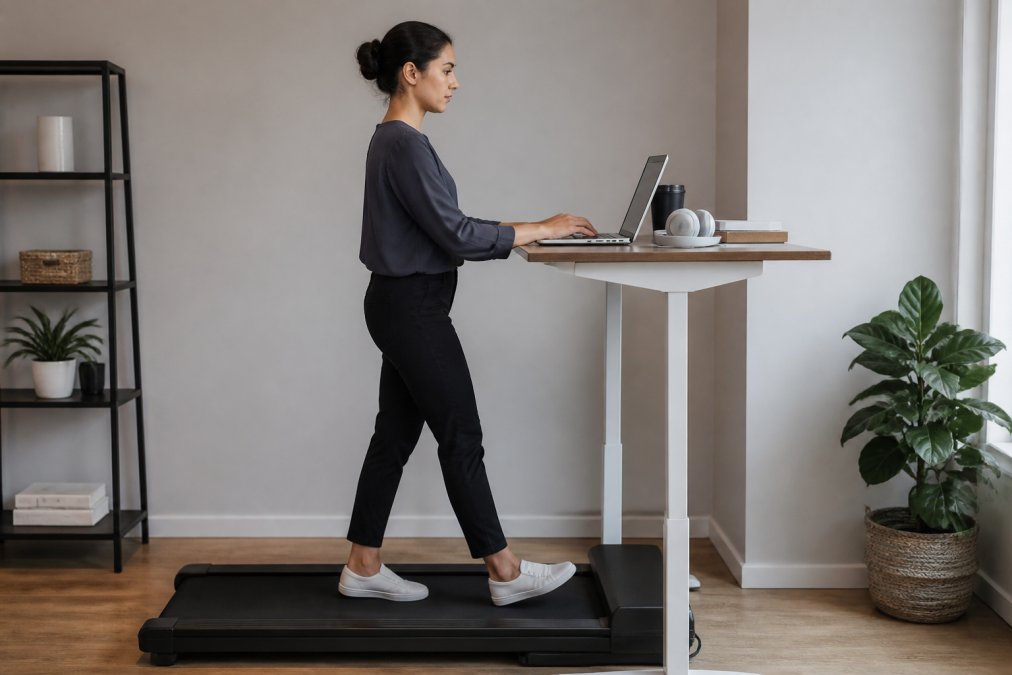
Walking while typing creates genuine cognitive load. Your brain manages balance, stride, and motor control while processing written work. For simple tasks like reading emails or listening to calls, this works fine. For complex work like writing code or editing spreadsheets, typing speed typically drops 15-25% and error rates increase (peer-reviewed research).
Under desk pedaling introduces almost no cognitive load. Your legs operate on a semi-automatic pattern once you establish rhythm. You can pedal while writing, analyzing data, or having a video call without noticeable impact on cognitive performance.
Walking treadmills require conscious effort to start, a 10-15 second transition. Under desk bikes require zero transition. This lower friction means more frequent, shorter activity bouts throughout the day. Instead of a single 30-minute walking session, you might accumulate 3-4 ten-minute pedaling sessions.
Some people find walking helps them think through problems, creating a meditative state that improves focus. Others find standing and walking creates enough distraction that work quality suffers. If you struggle with focus, the under desk bike is the safer choice.
Which Option Should You Choose
Start with your constraints: space and noise.
If you have limited floor space and need silent operation, an under desk bike is the only practical choice. If you're on frequent video calls and can't tolerate background noise, the bike wins decisively.
If you have adequate space and can tolerate moderate noise (40-50 dB), the walking treadmill offers superior calorie burn and more natural movement patterns.
The tiebreaker is consistency. Which device will you actually use for 12 months? For most sedentary workers, the answer is the under desk bike. The lower friction for daily use, silent operation, and ability to pedal during focused work create conditions for habit formation.
Consider your work patterns. If your job involves frequent video calls, the under desk bike is essential. If your work is primarily asynchronous, the walking treadmill becomes more viable. If you have existing joint issues, the under desk bike's low-impact nature makes it safer long-term.
Wild Bloom's portable under desk treadmill bridges some gaps with its quiet motor and foldable design, making walking treadmill usage more practical for apartment dwellers and professionals on frequent calls. But the fundamental trade-off remains: walking treadmills burn more calories and engage more muscles, while under desk bikes integrate more seamlessly into actual work and sustain longer-term usage.
Your choice should reflect your actual constraints and honest assessment of what you'll maintain. The best fitness equipment is the one you'll use consistently.
The walking treadmill vs under desk bike decision ultimately comes down to your work environment, space limitations, and commitment to consistency. If you're working in a small space with frequent video calls, an under desk bike offers silent, frictionless movement. If you have room and can tolerate moderate noise, a walking treadmill provides superior calorie burn and movement variety. Wild Bloom's portable under desk treadmill combines the benefits of a walking treadmill with practical features designed for apartment living: a quiet motor below 45 dB, no-assembly setup, and transport wheels for easy storage. Whatever you choose, select equipment you'll actually use daily.
Frequently Asked Questions
Is 30 minutes on a walking treadmill the same as 30 minutes on an under desk bike?
No. Walking treadmills typically burn 200-300 calories per hour depending on speed and body weight, while under desk bikes burn 150-250 calories per hour at typical office intensities. Walking engages more muscle groups and elevates heart rate higher, making it generally more effective for calorie expenditure. However, under desk bikes allow easier multitasking, which means you're more likely to use them consistently throughout your workday, potentially offsetting the per-hour difference through cumulative activity.
Can you type effectively while using a walking treadmill vs an under desk bike?
Under desk bikes are significantly better for typing. Pedaling requires minimal upper-body coordination, so you can maintain full typing speed and accuracy. Walking treadmills demand more balance and attention, especially when reaching across your desk. Most users find typing possible at slower walking speeds (1-2 mph), but accuracy drops during faster paces. If video calls and constant typing are part of your day, an under desk bike allows uninterrupted work without the coordination challenge.
Which is quieter for open office or shared living spaces?
Walking treadmills are significantly quieter. Quality models like Wild Bloom operate below 45 dB, roughly equivalent to a quiet library. Under desk bikes produce 50-65 dB due to pedal and chain mechanisms, comparable to normal conversation. For shared apartments or open offices where noise complaints are a concern, a walking treadmill is the better choice. The mechanical noise from pedaling is harder to mask during video calls than the steady hum of a treadmill motor.
What's the actual long-term impact on joints and posture from daily use?
Walking treadmills provide low-impact exercise that improves blood circulation and reduces sedentary stiffness without joint stress. The shock-absorbing belt protects knees and ankles. Under desk bikes also offer low-impact movement, but repetitive pedaling can cause hip and knee strain if the seat height is incorrect or if you use it for extended periods daily. Both are gentler than sitting all day, but walking more closely mimics natural movement patterns. Proper ergonomic setup, desk height, seat position, walking pace, is critical for both to avoid musculoskeletal issues over months and years.
This article was written using GrandRanker