

Table of Contents
- Why Increasing Steps While Working Matters
- Walk During Your Commute and Lunch Hour
- Use a Walking Pad for Desk Work
- Take Walking Meetings and Movement Breaks
- Benefits of Walking During Work Breaks
- Desk Exercises for Weight Loss and Daily Activity
- Track Your Progress and Build the Habit
- Conclusion
Last Updated: August 14, 2026
Why Increasing Steps While Working Matters
Sitting for eight or more hours daily increases your risk of cardiovascular disease, metabolic dysfunction, and weight gain, even if you exercise regularly. The good news is that how to increase steps while working doesn't require a complete lifestyle overhaul. Small, consistent movement throughout your workday can meaningfully improve your health, energy levels, and productivity.
At Wild Bloom, we've observed that professionals who integrate movement into their workday report higher focus, better mood, and improved sleep quality. The barrier isn't motivation, it's friction. Most people don't know how to move more without disrupting work or feeling awkward in front of colleagues. This guide walks you through seven practical strategies to build a more active work routine, starting today.
Walk During Your Commute and Lunch Hour
Your commute and lunch break represent your largest blocks of uninterrupted time. If you drive to the office, park farther away, an extra five-minute walk adds 500-600 steps daily. For public transit users, get off one stop early and walk the remaining distance.
Lunch breaks offer even greater potential. A 15-minute walk covers roughly 1,200 steps. Do this five days a week, and you've added 6,000 steps to your weekly total. Stepping outside breaks mental fatigue and returns you to your desk refreshed.
Remote workers must create movement deliberately. Walk around your apartment or neighborhood before starting work, or take a post-lunch walk before afternoon meetings. Research shows brief walks improve cognitive function and decision-making for the hours that follow.
Use a Walking Pad for Desk Work
A walking pad for desk work transforms your workspace into an active environment. Unlike full-size treadmills, these compact devices fit under or beside your desk, allowing you to walk while typing, reading, or attending video calls.
Wild Bloom's portable under desk treadmill is specifically designed for this use case. With a quiet motor below 45 dB, you can walk during video calls without microphone pickup or neighbor complaints. The no-assembly design means you can start using it within minutes of unboxing. The anti-slip, shock-absorbing belt protects your joints during extended sessions, and the foldable design stores easily when not in use.

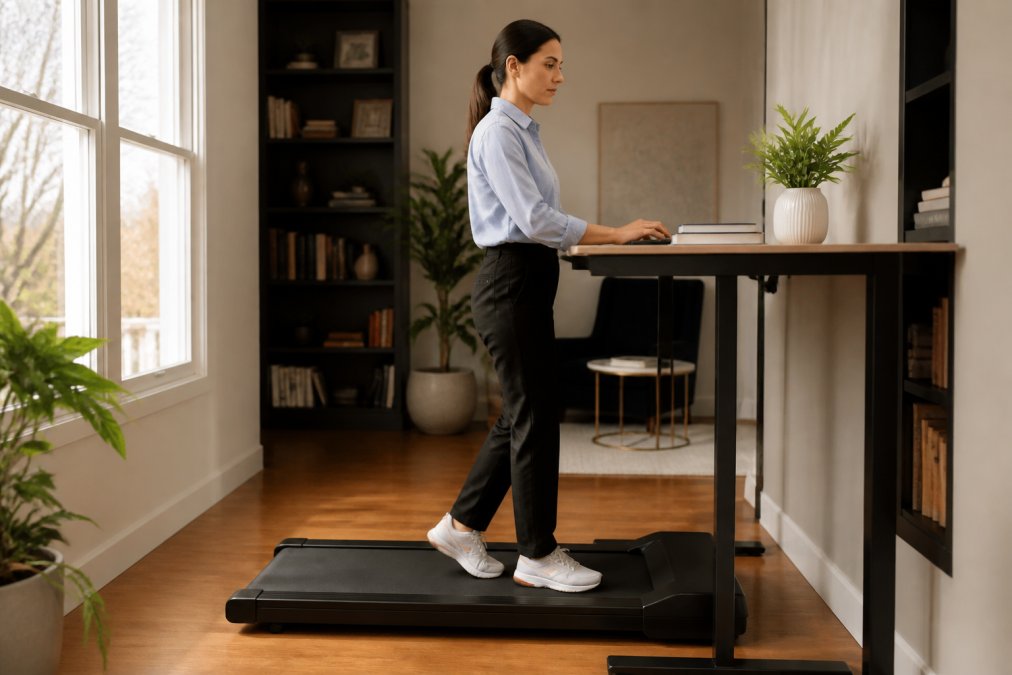
Start with 20-30 minute walking sessions at a slow pace (1.5-2 mph). This speed allows you to maintain full work focus while accumulating steps. A 30-minute session adds roughly 1,500-1,800 steps. Over a full workday with multiple sessions, you can easily add 3,000-5,000 steps without leaving your desk.
Take Walking Meetings and Movement Breaks
Walking meetings transform routine calls into movement opportunities. If your meeting involves discussion rather than screen-sharing, take the call while walking. A one-hour meeting becomes a one-hour walk, adding 2,500-3,000 steps depending on your pace. For video calls where you need to appear on camera, position your camera to show only your upper body, allowing you to pace just outside the frame.
Movement breaks between meetings serve a different purpose. Every 60-90 minutes of focused work, stand up and walk for 5-10 minutes. Climb stairs, pace your office or apartment, or step outside. These short bursts interrupt the physiological stress of prolonged sitting and reset your mental focus.
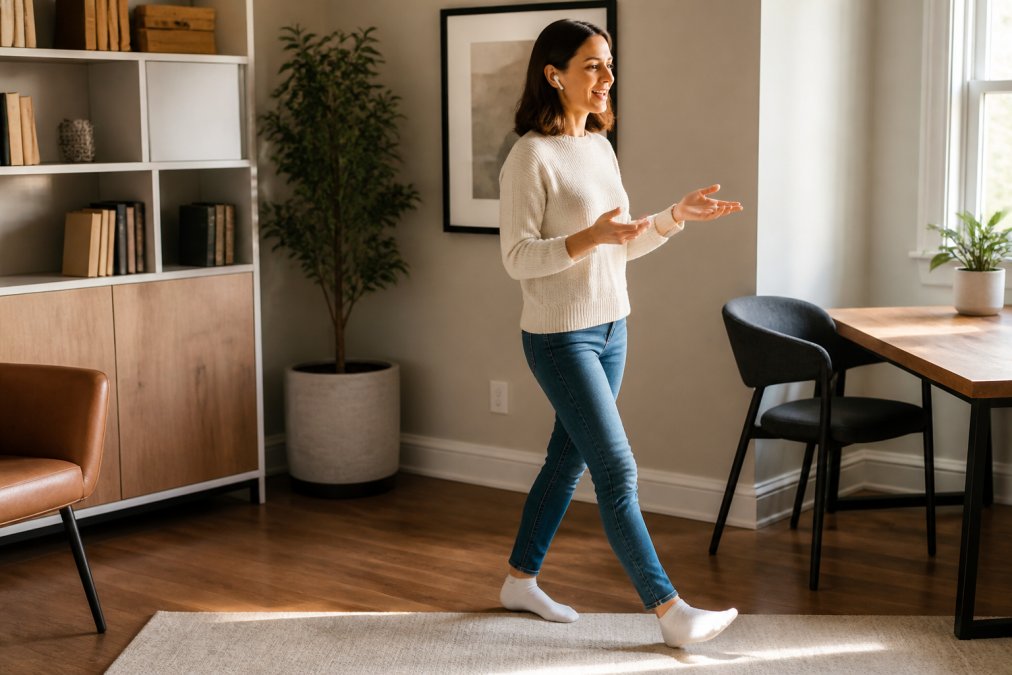
The psychological barrier to walking meetings is real. In practice, most people appreciate the transparency. Mentioning "I'm going to walk while we talk" at the start of the call normalizes movement and often prompts others to do the same. Many organizations now encourage walking meetings as part of their wellness initiatives.
Benefits of Walking During Work Breaks
Regular movement breaks during your workday deliver immediate and long-term health benefits. The real barrier to sustained walking is overcoming the psychological and social friction that makes people feel awkward moving around their workplace.
Physical and Metabolic Benefits
Walking increases your heart rate, improves circulation, and engages your muscles, counteracting the metabolic slowdown caused by prolonged sitting. A 10-minute walk after lunch stabilizes blood sugar levels, reducing the afternoon energy crash. Studies show that a 2-3 minute walk after meals reduces post-meal blood sugar spikes by 20-30%, directly preventing the energy dip that kills afternoon productivity.
Psychologically, movement breaks reduce stress and anxiety. Walking triggers the release of endorphins, improving mood and mental clarity. Many professionals report that their best ideas come during walks, the change of scenery and physical movement activate different neural pathways.
The Psychological Barrier: Feeling Unproductive
Many office workers feel guilty taking movement breaks because they perceive walking as "not working." This is the primary reason people abandon movement habits, even when they understand the health benefits. You might worry that stepping away from your desk signals to your manager that you're not busy, or that colleagues will judge you for pacing around the office.
This barrier is rooted in workplace culture. In many corporate environments, visible busyness is conflated with productivity, even though research shows the opposite: people who take regular breaks make fewer errors, solve problems faster, and produce higher-quality work. The solution is to reframe movement as part of your work process, not a break from it.
Start by normalizing movement in your immediate team. Mention your walking break casually: "I'm going to take a 10-minute walk to clear my head before I tackle this report." This transparency removes the secrecy that makes movement feel like you're hiding something. If your manager or colleagues see you walking regularly and your work quality remains high, the perception shifts.
If you work in a conservative environment where walking around the office still feels risky, move your breaks outside or to a different floor. Remote workers have an advantage: you can pace freely around your home without any social friction, making it easier to build the habit.
Cumulative Step Impact
If you add three 10-minute walks to your workday, you've accumulated roughly 3,000 steps from movement alone. Combine this with commute walking and deliberate standing or pacing, and reaching 8,000-10,000 steps becomes achievable for most desk workers. Over weeks and months, this consistency drives measurable improvements in cardiovascular health, weight management, and overall fitness.
Once you establish the habit of taking movement breaks without guilt or social friction, walking becomes as automatic as checking email. At that point, the health benefits compound without requiring willpower or motivation.
Desk Exercises for Weight Loss and Daily Activity
Desk exercises complement your walking strategy, but increasing movement intensity without proper ergonomic setup creates injury risk. Before adding bodyweight exercises to your workday, assess your footwear and workspace setup.
Footwear and Joint Protection
Most desk workers wear footwear designed for sitting, not movement. When you shift to frequent standing, walking, and exercise, inadequate arch support and cushioning cause plantar fasciitis, heel pain, and knee strain within weeks. If you're increasing daily steps significantly, invest in supportive athletic shoes or insoles with proper arch support. Gel insoles or cushioned inserts cost $30-$60 and prevent the foot pain that derails movement habits.
When performing desk exercises like squats or stair climbing, wear shoes with lateral stability and a firm heel counter. Barefoot or sock-only exercise on hard office floors increases ankle strain and fall risk. This is particularly critical for remote workers who may default to barefoot movement around their home.
Repetitive Strain and Movement Variety
Adding 3,000-5,000 steps daily through walking pads or increased commute walking is low-impact. But desk exercises like wall push-ups, repeated stair climbing, or constant standing in the same posture can trigger overuse injuries without movement variety. Perform wall push-ups only 2-3 times per week, not daily. Alternate stair climbing with flat-ground walking. Change which leg you lead with when climbing stairs. This variation prevents tendonitis and repetitive strain injuries.
If you have a history of knee, hip, or lower back pain, consult a physical therapist before adding stair climbing or high-repetition squats. Many employers offer ergonomic assessments through their health plans; use this resource before ramping up desk exercise intensity.
Practical Desk Exercise Progression
Start conservatively. In your first week, add only walking, no desk exercises. In week two, add one set of 10 desk squats, 2-3 times per week. In week three, add wall push-ups or stair climbing on non-consecutive days. This gradual progression prevents acute soreness and overuse injuries that cause people to abandon movement habits.
Simple bodyweight exercises require no equipment and take just a few minutes between tasks. Desk squats, wall push-ups, and seated leg lifts engage your largest muscle groups and elevate your heart rate without disrupting your workspace. Perform 10-15 repetitions of each exercise during a five-minute break, and you've activated muscles that have been inactive all morning.
Stair climbing is one of the highest-intensity activities you can do in a short time. Five trips up and down a standard flight of stairs takes roughly five minutes and burns significant calories while building leg strength. However, limit stair climbing to 2-3 times per week initially, and increase frequency only after your knees and ankles adapt over 3-4 weeks.
The advantage of desk exercises for weight loss is that they're immediately accessible. You don't need a gym membership, special equipment, or much space. A two-minute break for bodyweight exercises maintains muscle engagement and prevents the metabolic slowdown that occurs during extended sitting.
Track Your Progress and Build the Habit
Tracking your daily step count creates accountability and motivation. Wearable fitness trackers, smartphone apps, or simple pedometers provide real-time feedback on your progress. Seeing your step count increase from 4,000 to 7,000 to 10,000 over weeks is a powerful motivator.
Set realistic daily targets. The commonly cited 10,000-step goal works for many people, but starting with 6,000-7,000 steps is more sustainable if you're currently sedentary. Once you've maintained this level for two weeks, increase your target by 1,000-2,000 steps.
Habit stacking, linking new behaviors to existing routines, makes movement automatic. Walk during your existing lunch break. Take the stairs instead of the elevator. Pace during your regularly scheduled calls. These small substitutions require no additional time investment and quickly become unconscious routines.
The first 21-30 days are critical. During this period, your new movement habits are fragile and easily disrupted. Protect them by removing friction. Keep your walking pad accessible, wear comfortable shoes, and schedule walking meetings just as you would any other appointment.
Conclusion
Increasing your daily step count while working is entirely achievable through deliberate, consistent strategies. Walking during your commute and lunch hour, using a walking pad for desk work, taking walking meetings, and incorporating brief desk exercises create multiple opportunities for movement without disrupting your productivity.
Wild Bloom's portable under desk treadmill removes the friction of adding movement to your workday. With its quiet motor, no-assembly design, and compact storage, you can start accumulating steps during your next work session. The anti-slip, shock-absorbing belt ensures comfortable walking while you focus on your tasks. Get started with Wild Bloom and reclaim the active lifestyle your health deserves.
Frequently Asked Questions
How can I increase steps while working if I'm on back-to-back video calls?
A quiet walking pad with a motor below 45 dB, like the Wild Bloom portable under desk treadmill, allows you to walk during calls without background noise reaching your microphone. Position the pad under your desk so you can walk naturally while your hands remain free for typing or gesturing. Many professionals pace during calls anyway; a walking pad simply channels that movement into step count. Start with slower speeds during important calls to maintain focus and stability.
What are the benefits of walking during work breaks?
Walking breaks boost cardiovascular health, increase metabolic rate, and combat the effects of prolonged sitting. Even short 5-minute walks reduce repetitive strain, improve posture, and enhance mental clarity, helping you refocus on tasks afterward. Regular movement breaks throughout the day accumulate significantly toward your daily step goal without requiring a separate workout session. Studies show that frequent movement also improves work-life balance and reduces fatigue compared to sitting continuously.
Can desk exercises for weight loss actually work alongside a desk job?
Yes. Desk exercises combined with increased daily steps create a compound effect on calorie expenditure and metabolism. Desk-based movements like chair squats, desk push-ups, and standing calf raises take 2-3 minutes and can be done hourly. When paired with a walking pad or walking meetings, these exercises address both cardio and strength, supporting weight loss goals without leaving your workspace. Consistency matters more than intensity, small, frequent movements add up significantly over time.
How do I actually stick with increasing steps instead of letting equipment collect dust?
Build the habit by integrating movement into existing routines (habit stacking). Attach walking to activities you already do: walk during lunch, pace during calls, use a walking pad while checking email. Set a realistic daily step goal, 10,000 steps is a common target, but starting at 6,000-8,000 steps is more sustainable. Use a wearable fitness tracker to monitor progress and celebrate small wins. Choose equipment designed for your space: a compact, foldable walking pad requires minimal setup and storage, removing friction that causes abandonment.
This article was written using GrandRanker