

Table of Contents
- Why Your Home Office Needs a Quiet Treadmill
- Under Desk Treadmill Noise Levels: What 45 dB Really Sounds Like
- What to Look For in a Quiet Treadmill for Your Workspace
- How to Reduce Treadmill Noise on Hardwood Floors
- The Benefits of Walking While Working
- Wild Bloom Portable Under Desk Treadmill: A Top Pick
- Maintenance Tips for Long-Term Quiet Operation
- Final Thoughts: Choosing Your Walking Pad
- Frequently Asked Questions
Last Updated: September 4, 2026
Why Your Home Office Needs a Quiet Treadmill
The average remote worker spends over eight hours a day seated, and that static posture takes a measurable toll on energy, focus, and long-term health. A quiet treadmill for home office use solves this by letting you walk at a low speed while you answer emails, join calls, or review documents. At Wild Bloom, we understand how sedentary desk workers can add thousands of steps without sacrificing the professional atmosphere of their workspace.

A quiet treadmill is a walking treadmill engineered to run at a low decibel level, typically under 45 dB, so it does not interrupt conversations or appear on sensitive microphones. The core challenge is finding a model that pairs that acoustic performance with a footprint that fits a cramped apartment or home office. Below, we will show you exactly how to evaluate noise specs, cushioning, and motor quality so you choose a machine you will actually use daily.
Most guides treat treadmills as fitness equipment first. The better approach treats them as office furniture that happens to move. That shift in perspective changes which features matter most, starting with how loud the unit really is.
Under Desk Treadmill Noise Levels: What 45 dB Really Sounds Like
Under desk treadmill noise levels are the single most important specification for a shared or professional environment, and 45 dB is quieter than most people assume. To put that in context, a quiet library measures around 40 dB, while a normal conversation at three feet registers near 60 dB. A walking pad running at 45 dB produces a soft mechanical hum rather than the rhythmic thumping of a full-size treadmill.
The noise you hear comes from two sources: the motor and the impact of your feet on the deck. A motor operating below 45 dB is barely audible over standard office ambient sound, but foot strike generates impact noise that travels through the frame and into the floor. This distinction matters because a motor can be silent while the deck still transmits vibration into a neighbor's ceiling below.
CDC workplace health guidance notes that reducing sedentary time through light physical activity can improve overall wellness, but that benefit disappears if the equipment disrupts your work. For video calls, a 45 dB unit with a cushioned belt keeps the mechanical hum out of your microphone, which is the difference between a professional call and one with distracting background noise.
What to Look For in a Quiet Treadmill for Your Workspace
Selecting the right machine requires balancing four factors: motor quality, deck cushioning, footprint, and weight capacity. A quiet treadmill for home office use must excel in all four, because a weakness in any one will surface during daily walking sessions.
Start by confirming the decibel rating is measured at walking speed, not idle. Many manufacturers list motor noise in isolation, which ignores the sound of the belt moving over the deck. Look for a unit that specifies its noise level during operation, ideally below 45 dB, and check whether the belt is lubricated from the factory to reduce friction.
Motor Horsepower and Noise Reduction
Motor horsepower determines how smoothly the belt moves at low speeds, and a motor that strains will produce more mechanical hum. A continuous horsepower rating between 0.5 and 1.0 CHP is sufficient for walking speeds up to 4 mph, which covers typical office walking paces. Higher horsepower motors run cooler and maintain consistent speed, reducing the whine that comes from a motor struggling under load.
Brushless motors are worth seeking out because they generate less friction and noise than brushed alternatives. A brushless motor also lasts longer, which matters when the treadmill is running for several hours each day rather than a single workout session. The trade-off is cost, but the quieter operation justifies the premium for office use.
Cushioned Decks and Shock Absorption
A cushioned deck absorbs the impact of each foot strike, protecting your joints and reducing the vibration that travels into the floor below. Deck thickness directly correlates with shock absorption; a thicker deck with multiple layers of rubber or foam dampens impact more effectively than a thin, rigid surface. The anti-slip belt on the Wild Bloom portable under desk treadmill includes shock-absorbing layers that reduce impact noise while keeping your feet stable as you type.
Folding Mechanisms and Footprint
A folding mechanism determines whether the treadmill lives under your desk or gets stored in a closet between sessions. Look for a unit with built-in transport wheels and a foldable deck that reduces the footprint by roughly half when not in use. A treadmill that folds flat enough to slide under a couch or stand against a wall is far more likely to be used consistently than one that requires dedicated floor space.
How to Reduce Treadmill Noise on Hardwood Floors
Hardwood floors amplify impact noise because the deck transmits vibration directly into the floor joists and the space below. Adding a dedicated treadmill mat or acoustic flooring pad is the most effective way to reduce treadmill noise on hardwood floors, as the rubber layer absorbs vibration before it reaches the subfloor. A mat also protects the hardwood from scuffs and reduces the risk of the treadmill shifting during use.
For apartments with downstairs neighbors, combine a high-density rubber mat with the treadmill's own cushioning system. The mat should extend a few inches beyond the treadmill's footprint on all sides to catch lateral movement. If you still notice vibration transfer, a second layer of acoustic underlayment designed for gym equipment can further isolate the unit from the floor.
Belt tension and lubrication also affect noise levels over time. A belt that is too loose will slap against the deck, while a dry belt produces a squeaking friction sound. Check the manufacturer's maintenance schedule and lubricate the belt every few months to keep the running surface smooth and quiet.
The Benefits of Walking While Working
The benefits of walking while working extend beyond step count into cognitive performance and metabolic health. Light walking at one to two miles per hour raises your heart rate modestly without breaking your concentration, allowing you to maintain focus on complex tasks while accumulating movement throughout the day. Research on sedentary behavior and workplace health suggests that breaking up prolonged sitting with light activity can reduce fatigue and improve mood.
Walking also addresses the physical discomfort of desk work. Prolonged sitting tightens hip flexors and weakens gluteal muscles, contributing to lower back pain. Walking at a slow pace keeps those muscles engaged and promotes better posture, particularly when paired with a standing desk setup that aligns your screen at eye level.
The productivity argument is straightforward: a two-hour walking session adds roughly 4,000 steps without requiring a single minute of dedicated workout time. Over a five-day work week, that is 20,000 additional steps that would otherwise require multiple gym sessions or long outdoor walks.
Wild Bloom Portable Under Desk Treadmill: A Top Pick
For most home office setups, our top pick is the Wild Bloom portable under desk treadmill at $149.99, because it pairs a below-45 dB motor with a shock-absorbing belt in a foldable frame. The unit arrives fully assembled, so you can place it under your desk and start walking within minutes of unboxing. Built-in transport wheels let you roll it from your workspace to a closet when you need the floor space back.
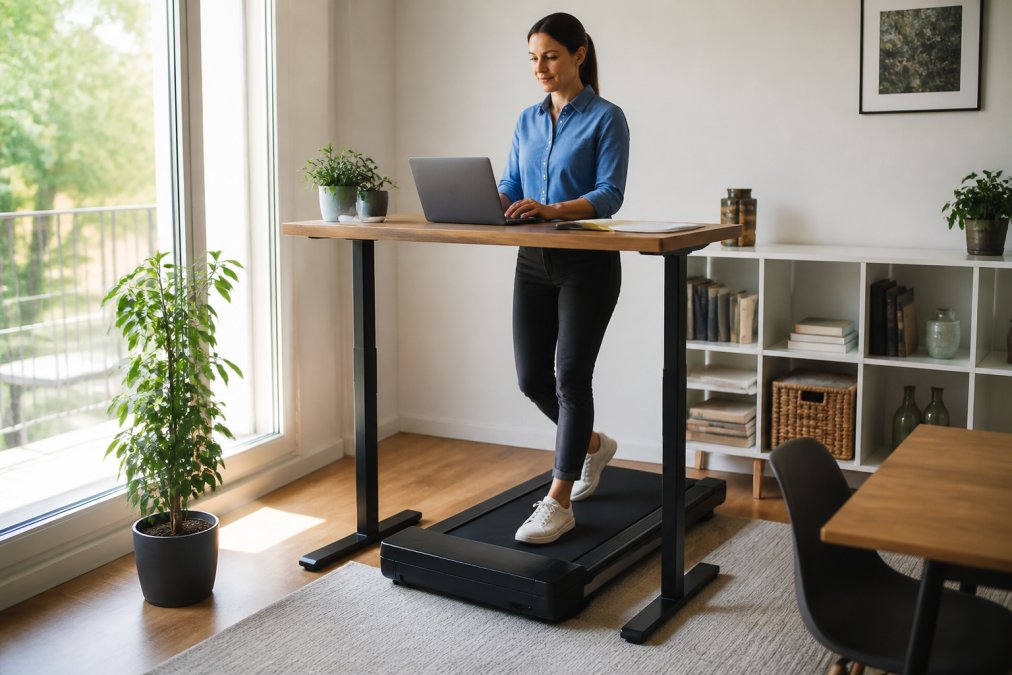
The walking surface uses an anti-slip, shock-absorbing belt that keeps your stride stable while reducing the impact noise that travels through floors. At under 45 dB, the motor produces a soft hum that stays below the threshold of most conference call microphones. The foldable design reduces the footprint significantly when stored, making it practical for apartments where floor space is limited.
| Feature | Wild Bloom Walking Pad | What It Means for You |
|---|---|---|
| Noise Level | Below 45 dB | Won't disrupt calls or neighbors |
| Assembly | None required | Use it within minutes of arrival |
| Belt | Anti-slip, shock-absorbing | Stable stride, reduced impact noise |
| Storage | Foldable with transport wheels | Slides into a closet when not in use |
| Price | $149.99 | Entry-level cost for daily movement |
The one limitation is that this is a walking treadmill, not a running machine. Speed tops out at a brisk walking pace, which is exactly what you need for office use but insufficient for high-intensity cardio sessions. For the specific job of adding steps while you work, it is difficult to beat at this price point.
Maintenance Tips for Long-Term Quiet Operation
A quiet treadmill stays quiet only with regular maintenance, and the most common cause of increasing noise is a dry belt. Lubricate the belt every three months using the manufacturer's recommended silicone-based lubricant, applying it to the underside of the belt while it runs at a low speed. This reduces friction between the belt and deck, which is the primary source of mechanical hum over time.
Check belt tension monthly by lifting the center of the belt; it should rise roughly two to three inches off the deck. A loose belt will slip and slap, while an overtightened belt strains the motor and produces a high-pitched whine. Adjust the tension bolts at the rear of the treadmill in small increments, testing after each quarter turn.
Keep the motor and belt free of dust and debris by wiping down the running surface weekly and vacuuming around the motor housing monthly. Dust buildup on the motor increases operating temperature and noise. Finally, confirm that all mounting bolts remain snug, since vibration can loosen hardware over time, and a loose frame will rattle at speed.
Final Thoughts: Choosing Your Walking Pad
Selecting the best quiet treadmill for home office use comes down to matching the noise profile, cushioning, and footprint to your specific workspace. A unit that runs below 45 dB protects your professional calls, while a shock-absorbing belt and rubber mat protect your neighbors and your joints. The Wild Bloom portable under desk treadmill combines these features with a no-assembly design and foldable storage, making it a practical choice for remote workers who want to move more without disrupting their day.
For those concerned about noise, OSHA occupational noise exposure guidance confirms that sound levels below 70 dB pose no hearing risk, meaning a 45 dB walking treadmill sits comfortably within safe, unobtrusive limits. The habit-forming potential is strong when the equipment is quiet, compact, and ready to use the moment you sit down to work.
Get started with Wild Bloom and turn your workday into a source of steady, healthy movement without sacrificing a single moment of focus.
Frequently Asked Questions
How many decibels should a quiet treadmill be?
A quiet treadmill for a home office should operate at or below 45 dB. This is roughly the level of a quiet library or a soft whisper, making it suitable for video calls and focused work. Standard treadmills often run between 60 and 70 dB, which is closer to a normal conversation and will likely be picked up by your microphone. Look for the decibel level in the product specs before buying.
Are under-desk treadmills actually quiet enough for meetings?
Yes, a quality under-desk treadmill with a motor below 45 dB is quiet enough for meetings. The key is choosing a model with a strong motor and good vibration dampening. A motor running at low speed creates a consistent hum rather than disruptive impact noise. However, your walking speed and the surface you place the treadmill on also matter. Using a mat can further reduce any sound transmitted to the floor.
Do folding treadmills make more noise than stationary ones?
Not necessarily. The noise level is determined more by the motor quality, belt tension, and deck construction than by whether the treadmill folds. A well-designed folding treadmill with a solid locking mechanism can be just as quiet as a stationary model. The potential for extra noise comes from a loose hinge or an unstable deck, so checking for sturdiness and a secure fold is important.
What is the best way to reduce treadmill noise on hardwood floors?
The best way to reduce noise on hardwood floors is to use a dedicated treadmill mat. These mats absorb vibration and dampen impact noise. They also add a layer of friction to prevent the treadmill from shifting. For additional soundproofing, consider placing rubber anti-vibration pads under the mat's corners. This setup helps protect your floor and minimizes the sound that travels to neighbors below.
This article was written using GrandRanker